

AIS 140 GPS: What Indian Fleet Operators Actually Need to Know
An operator in Vadodara buys a tracking device for Rs. 3,000 from a shop near Transport Nagar, fits it, and considers the job done. At the fitness renewal, the device is not on the approved list, the fitment certificate is missing, and the vehicle does not clear. The money is gone, and the work has to be redone with a certified unit.
GPS System in Logistic Industry: Quick Summary
GPS System in Logistic Industry: AIS 140 GPS explained for Indian operators: which vehicles need a tracking device, what the standard requires, and where.

That is the ordinary AIS 140 GPS failure, and it comes from treating a compliance requirement as a shopping decision. Here is what the standard actually asks for.
What AIS 140 GPS is
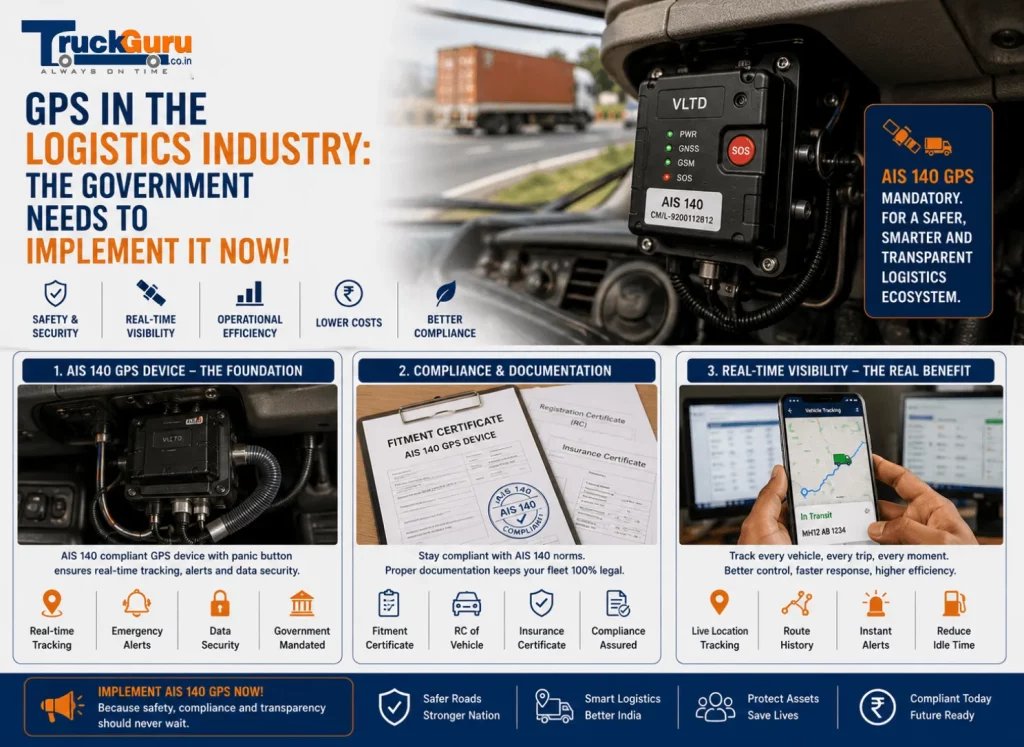
AIS 140 is an Automotive Industry Standard that covers vehicle location-tracking devices and related equipment for public transport and specified categories of commercial vehicles in India. In practice, it requires three things on a covered vehicle: a vehicle location tracking device that reports position to a backend, one or more emergency buttons, and the device being of a type that has been tested and certified against the standard.
The stated purpose is safety and operational oversight rather than fleet management convenience. That distinction matters, because the data goes to a state backend control centre, not only to you.
Device certification runs through testing agencies such as ARAI and ICAT. Applicability and enforcement sit with the Ministry of Road Transport and Highways and your state transport department, and the detail varies by state.
VERIFY: Confirm current applicability by vehicle category and state before publishing. AIS 140 coverage, exemptions and enforcement timelines have been amended repeatedly, and I cannot verify the present position. This is the single most important check on this page, because operators will act on it.
Which vehicles it covers
This is where most confusion sits, and where the original article was vague.
AIS 140 GPS requirements were framed around public service vehicles and specified commercial categories rather than every vehicle on the road. Whether a particular goods vehicle is covered depends on its category and on how your state has implemented the requirement. A national permit goods carrier and a small intra-city delivery vehicle are not necessarily in the same position.
The practical instruction: do not rely on a vendor telling you your vehicle needs it, and do not rely on a neighbour telling you it does not. Ask your RTO for your specific vehicle category.
The embedded SIM, and why operators complain about it
The standard specifies an embedded SIM carrying more than one operator profile, so that if one network drops on a stretch of route the device can report through another. The engineering logic is sound. A tracking device that goes silent through a coverage gap defeats its purpose.
The operator complaint is about what follows from it. When connectivity is bundled into a device you cannot unbundle, you cannot switch providers if the service underperforms, and the accountability for a failure is split across the device manufacturer, the network operators and whoever integrated them. When the unit stops reporting, working out whose problem it is takes longer than fixing it would.
VERIFY: The specifics of embedded SIM provisioning, subscription terms and who bears liability for device failure need verification against the current standard and any subsequent circulars. The original article made confident claims about integrator accountability and switching rights that I cannot confirm.
What AIS 140 GPS does and does not do for your business
Worth separating the compliance obligation from the commercial benefit, because they are not the same thing.
- It answers the location question. You can tell a shipper where the vehicle is without calling the driver. That is worth more than it sounds, because shippers who have been left guessing by other operators notice immediately.
- It creates a route record. Useful for settling disputes about detention, deviation and time taken, all of which are otherwise argued from memory.
- It does not shorten transit. A vehicle held at a checkpoint is held whether or not you can see it. Visibility improves your communication, not your speed.
- It does not stop pilferage on its own. Location data tells you where a vehicle went. It does not tell you what left the body at a stop. Seals and a correctly completed consignment note do more here.
- It does not replace paperwork. The consignment note remains the contract of carriage. No tracking record substitutes for it.

Getting compliance right the first time
- Confirm your vehicle category with the RTO rather than with the device seller.
- Buy only a device certified against the standard. An uncertified unit is money spent twice.
- Keep the fitment certificate with the vehicle papers. It gets asked for when you least want to look for it.
- Check what happens at subscription renewal and who you contact when the device stops reporting, before you buy rather than after.
- If you run vehicles across states, check the requirement in each state you operate through, not only where you are registered.
Where this fits in Indian freight digitisation
AIS 140 GPS belongs to the same pattern as the e-way bill and FASTag: technology that reached scale in Indian freight because it was required, not because operators chose it. That pattern is set out in applications of IoT in transportation and logistics, and the software side of an operator business is covered in mobile apps for logistics.
About TruckGuru
TruckGuru runs full truck load intercity freight across 110-plus cities in India, connecting shippers with independent transport vendors. Vehicles in the network carry whatever tracking their category requires under AIS 140, the same as any other commercial vehicle on the road. That is a regulatory fact rather than a TruckGuru feature.
What the platform provides is a documented booking with vehicle type, route and rate stated before loading, toll included in the quoted fare, and payment staged across confirmation, loading and delivery with no cash accepted. See online truck booking or the transportation services page.
VERIFY: The original claimed roughly ten years in the industry and described TruckGuru as a leading vehicle transport company in Vadodara. I have removed both. Vehicle transport means automobile carrying, which is outside scope, and the years figure needs confirming. Supply the correct founding year, and I will add a factual line.
Key takeaways
- AIS 140 GPS requires a certified tracking device, emergency buttons and a backend connection on covered vehicle categories.
- Coverage depends on vehicle category and state implementation. Confirm yours with the RTO, not with a device seller.
- An uncertified device fails at fitness renewal, which means paying twice.
- The embedded multi-profile SIM improves reporting continuity and reduces your ability to switch providers.
- Tracking answers location questions and creates a route record. It does not shorten transit or prevent pilferage.
- The consignment note remains the document that protects a consignment.
Frequently asked questions
Is GPS mandatory for trucks in India?
Vehicle location tracking device requirements under AIS 140 apply to public service vehicles and specified commercial categories. Whether your goods vehicle is covered depends on its category and your state implementation, so confirm with your RTO.
What is AIS 140?
An Automotive Industry Standard covering vehicle location tracking devices, emergency buttons and their connection to a backend control centre for covered vehicle categories in India.
Can I fit any GPS device to comply?
No. The device must be type-certified against the standard through a recognised testing agency. A generic tracker will not clear compliance, and the cost has to be spent again.
Why does the device use a special SIM?
The standard specifies an embedded SIM carrying multiple operator profiles so reporting continues if one network is unavailable on part of a route. The trade-off is that you cannot switch connectivity providers independently.
Does tracking prevent theft or pilferage?
Not by itself. It tells you where the vehicle travelled and where it stopped. It does not record what left the body. Physical seals and a correctly completed consignment note remain the practical controls.
What happens if my device stops reporting?
You may face problems at fitness renewal or enforcement checks. Establish before purchase who you contact for device faults and what the resolution process is, because responsibility is often split between the device supplier and the connectivity provider.
Do I need to comply in every state I drive through?
Requirements are implemented at state level and vary. If you run interstate, check the position in each state on your routes rather than assuming your registration state governs.
The short version
AIS 140 GPS is a compliance requirement first and a fleet tool second. Get the category confirmation and the certified device right, keep the paperwork with the vehicle, and treat the visibility you gain as a bonus rather than the reason you fitted it.

Related Reading
- How to Estimate Goods Transport Rates: A Beginner’s Guide
- How Are Truck Transportation Charges Calculated in India?
- 6 Truck Booking Platforms Compared for FTL Freight in India: FR8, WheelsEye, Trukky, BlackBuck, Vahak & TruckGuru
For current rules and official notifications, see the Ministry of Road Transport & Highways.